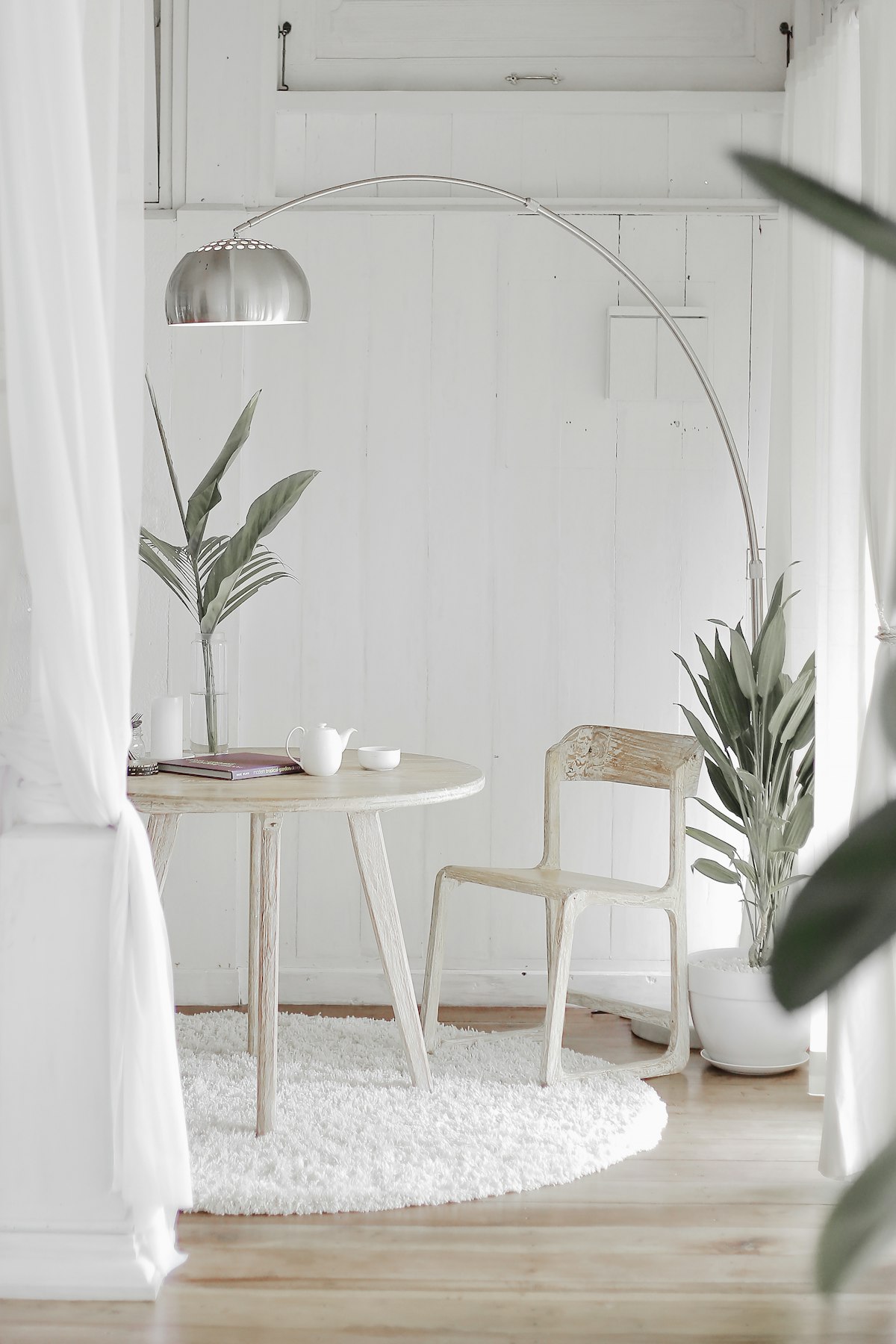
Walk into most newly renovated apartments after dark and you will find one lighting condition: a ceiling fitting, on or off. It is the cheapest thing to install and the hardest thing to live with, because a single overhead source flattens a room and puts light exactly where nobody needs it — the middle of the floor.
Layer one: ambient
Ambient light is the general wash that lets you move around safely. It should be indirect wherever possible — bounced off a ceiling, hidden in a cove, thrown up a wall. The test is simple: if you can see the source from a seated position, it is probably too visible. Dimmable, always, on its own circuit.
Layer two: task
Task light is aimed at what your hands are doing: the chopping board, the book, the desk. It wants to be brighter and cooler than ambient, and much closer to the work. In kitchens this means under-cabinet strips, not more downlights. Beside a bed it means a swing-arm you can point, not a table lamp you have to lean over.
- Kitchen counters: 300–500 lux at the surface
- Reading: a source above and behind the shoulder
- Desks: light from the side opposite your writing hand
- Mirrors: vertical sources either side, never above alone
A room with three lighting circuits feels like three different rooms across a day. A room with one circuit feels like one room, all the time.
Layer three: accent
Accent light is the layer people skip, and it is the one that makes a scheme feel designed. A picture light, a wash down a textured wall, a lamp inside a bookcase. It carries almost no functional load — its job is to give the eye somewhere to rest and to build depth once the ambient layer is dimmed low.

Planning it before the walls close
All of this is cheap while the walls are open and expensive afterwards. Before first fix, mark every circuit on the plan and walk it with your electrician: what turns on when you come home, what turns on when you cook, what is left on at 10pm. If you can answer those three questions, the scheme is probably right.